Hear a role, not just a sound
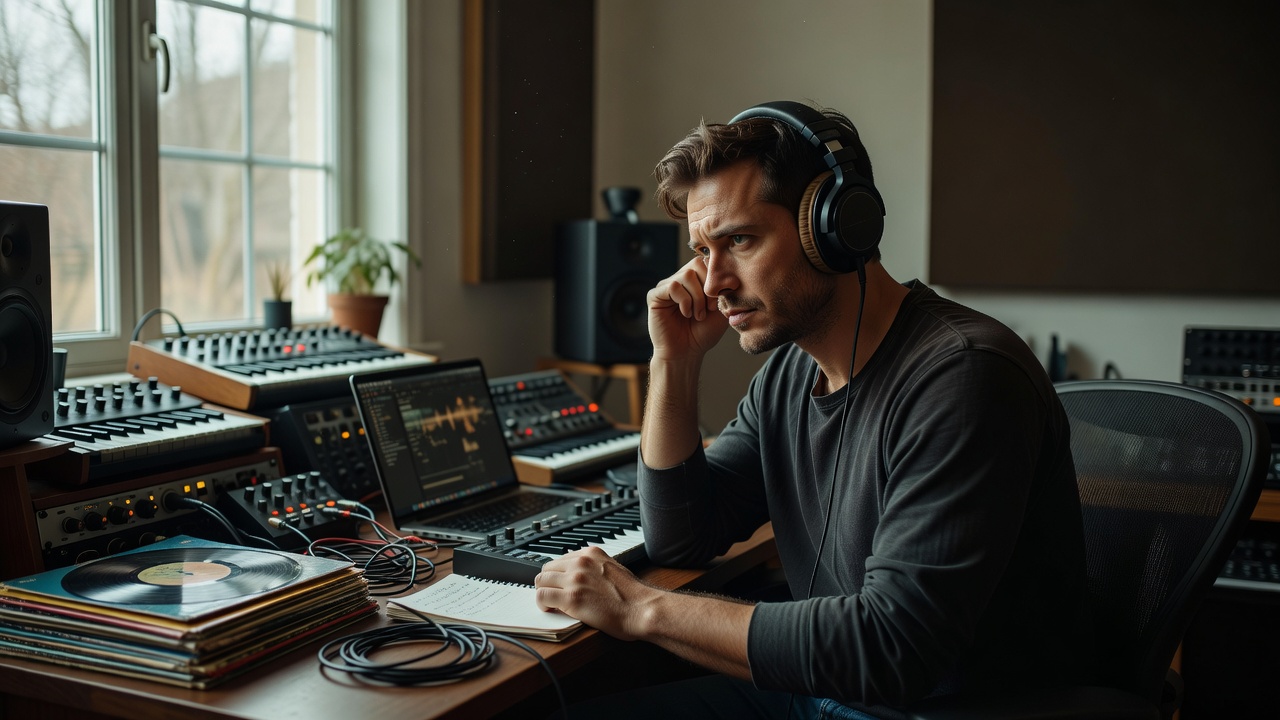
Sampling takes a recorded sound and places it in a new musical context. That context might come from a different rhythm, a new harmony, a changed texture or a deliberate interruption. The useful question is not simply “Does this sound good?” Ask what the fragment could contribute: a downbeat, a response, a little tension or a recurring point of recognition.
Listen once without touching the mouse. On the next pass, write a few words about what catches your ear. “Soft attack, unstable pitch, long tail” gives you more direction than “nice sample.” Your description becomes a practical brief for the edit.
Separate the recording from the composition
A commercial recording can involve rights in the sound recording and separate rights in the underlying composition. Using the recorded performance may require permission relating to both. Replaying a melody yourself avoids copying that particular recording, but it does not necessarily remove composition-related obligations. The relevant rules depend on the work, use and jurisdiction.
There is no universal number of seconds that makes a sample safe. Pitch changes, filtering, reversal and chopping do not automatically clear rights. Exceptions such as fair use are context-dependent, not a preset you can apply in a sampler. For a release with uncertain rights, seek qualified legal guidance rather than relying on an internet rule.
Choose a traceable starting point
For a first exercise, use a recording you made and control. Be alert to music playing in the background, identifiable voices and other material you may not have permission to reuse. A licensed sample pack can also work, but read the actual license. “Royalty-free” does not mean public domain, and some licenses restrict redistribution, isolated samples or particular uses.
Creative Commons licenses differ. CC BY 4.0 includes attribution conditions; CC BY-NC 4.0 limits commercial use; licenses with an ND condition can prevent sharing adaptations. A CC0 dedication is different again. Also check whether the uploader was entitled to offer the recording. Public-domain status may differ between countries and between a composition and a recording.
Make a source log before the session grows
Create a text file beside the audio. Record the source name, creator, original URL when applicable, license version, acquisition date and any attribution wording. Save the license or permission correspondence with the project. This small habit is easier than reconstructing a folder’s history just before release.
Keep the original recording untouched and edit a copy. Name files for what they contain, such as “wood-tap-soft-room,” rather than “sample-final-new.” A reliable source log and a clear filename are not glamorous, but they make creative work easier to revisit and responsibly share.
Build a first groove from one recording
Record several taps on a wooden surface, leaving silence between them. Listen for three different roles: a low knock, a bright click and a quieter texture. Import the recording into your DAW, duplicate it and trim three separate regions. Turn down monitoring before auditioning sudden transients.
- Set a comfortable working tempo, such as 90 BPM, and make a one-bar loop in 4/4.
- Place the low knock on beats one and three. Place the brighter sound on beats two and four.
- Add the quiet texture on one offbeat, then duplicate the bar.
- In the second bar, remove one event or move the texture. Listen for a question-and-answer relationship.
These positions are a scaffold, not a definition of a good beat. Your goal is to notice how the same source changes character when its timing and role change. Export both the plain version and your variation so you can compare them without looking at the arrangement.
Change one property at a time
Try shortening the bright sound before adding an equalizer. Try lowering the quiet texture before applying reverb. If you adjust pitch, listen for whether the result supports the low knock or competes with it. Level-match comparisons where possible: a louder result can seem more exciting without being more useful.
Finish by writing one sentence: “This groove works because…” Your answer might mention a pause, a contrast or a recurring accent. That is the beginning of an intentional production practice. When you are ready to develop the pulse, move to the drum lesson rather than collecting another folder of sounds.
Studio word: sample rate
Sample rate describes how many digital measurements represent one second of audio. It is not a measure of a sample’s musical value. Keep project settings consistent and let your DAW handle deliberate conversion when needed.